Why can't I get pregnant?

You’re struggling to conceive and want nothing more than to get pregnant? Find out here what might be causing this and what you can do about it. We’re rooting for you as you learn more about your situation and your cycle. This will increase your chances of fulfilling your dream of having a child.

Contents

Get to know your cycle well to help you conceive

Is my cycle healthy and fertile?

Having regular periods doesn’t necessarily mean that you Ice jumps and your cycle is healthy. During your cycle, the uterine lining builds up so that everything is ready in case an egg is fertilized. If no fertilized egg has implanted by the end of the cycle, the uterine lining is shed as a menstrual period so that a new cycle can begin.

To fulfill your desire to have a child, two additional conditions must be met. A fertile cycle involves ovulation, which is triggered by a typical temperature increase and a sufficiently long second phase of the cycle. To make your dream of having a child come true, you should find out whether these two conditions are met.

When exactly in my cycle am I fertile?

To get pregnant, in addition to a healthy cycle Timing is crucial. That’s because there are only a maximum of 6 days per cycle when you can conceive the baby you’re hoping for. However, every woman has her own unique cycle, and there’s no universal rule of thumb for determining when your fertile days are. For example, ovulation occurs exactly in the middle of the cycle in only about 4% of all women.


However, since pregnancy can only result from sex on your fertile days, it’s important to figure out exactly when your fertile window begins and ends. To do this, you should know that not every fertile day is the same. So when are your most fertile days Are you tracking your cycle? With this information, you can fulfill your dream of having a child.

OvulaRing receives excellent reviews

Why am I having trouble getting pregnant?

... and what you can do to finally get pregnant.

50% of women think they know when they ovulate, but only 14% are correct. This is partly due to the misconception that ovulation occurs in the middle of the cycle. However, this is true for only 4% of women.

Many couples have sex on what they think is the day of ovulation but never hit the fertile window. As a result, the pregnancy test comes back negative month after month, even though both partners are perfectly healthy. So, getting the timing right is crucial to making your dream of having a baby come true quickly. 81% of women trying to conceive who closely track their cycles become pregnant within 6 months.

Determining your fertile days: How to identify the best time

What you can do

It’s extremely important that you have a good understanding of your own cycle and know exactly how it works. Knowing exactly when your fertile days are increases your chances of getting pregnant more quickly. However, there are only 6 days per cycle during which you can get pregnant. This fertile window includes the 4 days before ovulation, the day of ovulation itself, and the day after.

To get pregnant, it’s especially important to track the time leading up to ovulation, because the likelihood of conception is highest when you have sex 1–2 days before ovulation. Even at this stage, your body temperature begins to change slightly. OvulaRing helps you recognize this change and shows you when your chances of getting pregnant are highest.

By the way, in the OvulaRing app and software, you can also easily mark the days you had sex. That way, you can always check later to see if you actually hit your fertile window.

See also:
The 10 Best Tips: How to Get Pregnant Faster
Making the Most of Cycle Tracking When Trying to Conceive

Many couples simply don’t have enough sex to get pregnant. To increase your chances of conceiving, having sex every 2 to 3 days is ideal! This keeps your reproductive system active, ensures that sperm are regularly renewed and of optimal quality, and helps you avoid missing your fertile window.

In addition, physical closeness triggers the release of oxytocin, the “bonding hormone,” which brings you closer together as a couple and strengthens your bond. Oxytocin also helps you feel calmer and more relaxed, as it regulates cortisol, the stress hormone, and your blood pressure.

What you can do

Try to avoid having sex on a schedule—it can dampen your desire and cause stress. Make time for each other regularly, set aside time just for the two of you, and enjoy being together. Talk openly about your desires and preferences. Regular kissing and physical contact throughout the day trigger the release of more bonding hormones, which in turn increases your attraction to one another.

Whether it’s a demanding job, a packed schedule, constant noise, or the frustration of being unable to conceive—stress takes many forms and is perceived and processed differently by each person. The fact is, however, that too much stress can make you sick, often leads to menstrual irregularities in women, and can even suppress ovulation.

When you’re stressed, your body releases stress hormones, which in turn cause it to produce fewer sex hormones. Prolonged stress makes your body think it’s in an emergency situation and doesn’t have the energy to support a pregnancy. As a result, it becomes much harder to get pregnant.

What you can do

Unfortunately, stress cannot (always) be avoided, but it makes sense to reevaluate your lifestyle, set aside time for rest, and generally take on fewer tasks. Moderate physical activity, a healthy diet, and relaxation techniques such as yoga, meditation, or autogenic training can help restore balance, reduce stress, and build resilience to stress. It is important to practice these relaxation techniques regularly.

We recommend that you incorporate a short 10-minute relaxation session into your daily routine. It will be easier for you if you turn it into a ritual and, for example, do it right after getting up or before going to bed.
OvulaRing detects stress through continuous, high-resolution monitoring. You can see exactly how stress affects your cycle. At the same time, you can also observe how regular yoga or meditation helps regulate your cycle again.

Competitive sports or prolonged, intense physical activity of any kind can cause your period to stop or prevent ovulation. Therefore, if you’re trying to conceive, you should avoid excessive and particularly frequent workouts, as too much intense training can reduce your fertility!

It turns out that slim women who engage in particularly intense exercise five to seven times a week are three times more likely to experience fertility issues. This is because, once a woman falls below a certain minimum weight (which varies from person to person), the body—in an effort to preserve itself—first “shuts down” reproductive function and eventually stops it altogether. In a state of “emergency mode,” pregnancy places too much strain on the body and consumes too much energy, whether due to an eating disorder or excessive exercise.

What you can do

With OvulaRing, you can tell exactly whether your exercise routine is having a negative impact on your cycle. If this is the case, you should reduce the intensity of your workouts and switch to less strenuous activities such as light jogging, yoga, or Pilates.

The absence of ovulation is a sign of disrupted cycle regulation. Since cycles without ovulation do not show a rise in temperature during the second half of the cycle, they are referred to as monophasic (single-phase) cycles. In these cycles, the core body temperature remains at a level similar to that of the first phase of the cycle. Nevertheless, menstrual bleeding often occurs at the usual time. Women therefore do not notice the absence of ovulation. This means that regular menstrual bleeding is not, as most women often assume, synonymous with a healthy cycle that includes ovulation!

Causes of cycles without ovulation

There are many reasons why a woman may not ovulate. For example, the regulatory pathways involving the diencephalon, pituitary gland, and ovaries may be disrupted. In addition, certain health factors can also negatively affect the regulatory system.

Any excessive physical or emotional stressors can disrupt the necessary balance. Possible causes include, for example, prolonged physical stress such as excessive exercise and high psychological stress, an unhealthy lifestyle, obesity, but also excessive weight loss—such as in cases of anorexia—a severe hormonal imbalance, or early onset of menopause.

More information: All About the “Non-Ovulatory Cycle” Cycle Type

What you can do

To make sure you’re ovulating and that your cycles are healthy, you can use OvulaRing, as it reliably detects even cycles without ovulation. OvulaRing identifies ovulation in retrospect with 99% accuracy. Conversely, this also means that a lack of ovulation is correctly identified. This way, you can always check exactly whether your cycles are healthy or if there might be a cycle disorder.

A cycle without ovulation isn’t necessarily a cause for concern and happens to every woman from time to time. Only if you don’t ovulate for several consecutive cycles should you talk to your gynecologist to determine the possible causes.

Here you can: Understand and accurately track your cycle

Luteal phase deficiency is one of the most common causes of infertility, yet it often goes unnoticed and untreated. Even if ovulation occurs, if the uterine lining cannot build up sufficiently—for example, due to luteal phase deficiency—you are not fertile; in this case, pregnancy would not be possible. In cases of luteal phase deficiency, also known as progesterone deficiency, the corpus luteum that remains after ovulation releases too little progesterone. Progesterone is the hormone that maintains pregnancy. It is essential for the uterine lining to build up properly and for a fertilized egg to implant. Luteal phase deficiency is characterized by a shortened second phase of the cycle lasting less than 12 days.

What you can do

OvulaRing allows you to reliably detect luteal phase deficiency. If the second phase of your cycle is consistently shorter than 12 days, you should talk to your gynecologist. If luteal phase deficiency is diagnosed, it can be effectively treated. Your gynecologist will prescribe the hormone progesterone. The timing of when you take the progesterone is crucial.

If progesterone is taken before ovulation, the body thinks it is already pregnant and will prevent ovulation. Progesterone should therefore only be taken once ovulation has definitely occurred. Here, too, OvulaRing can provide you with the best support and show you when the right time is to take progesterone.

Learn more: Getting Pregnant with Luteal Phase Defect

Women who are either severely underweight or overweight have a harder time getting pregnant. The reason for this is the metabolic activity of adipose tissue, which disrupts hormonal balance and can lead to functional disorders. Simply put, as the mass of adipose tissue increases, so does estrogen production, which can result in menstrual cycle irregularities or the absence of menstruation. However, if a woman consistently consumes fewer calories than her body needs, her body slows down the metabolism of nutrients and shuts down bodily functions that are not strictly essential for survival, such as reproductive capacity.

Even after just two weeks without a steady intake of food, your menstrual cycle can stop. The composition of your diet also plays an important role. A vegetarian diet that is very high in carbohydrates is more likely to cause menstrual irregularities than a balanced Mediterranean diet.

What you can do

To get pregnant, it’s a good idea to get as close as possible to your ideal weight, whether you’re overweight or underweight. Try to eat as balanced and healthy a diet as possible and incorporate moderate exercise into your daily routine. With OvulaRing, you can track exactly how weight gain or loss affects your cycle.


Heavy alcohol consumption affects the fertility of both men and women. Women who are alcohol-dependent often experience menstrual irregularities, while men experience a decrease in sperm production and motility, as well as erectile dysfunction. However, these issues usually resolve themselves after three months of abstinence.

It is common knowledge that smoking during pregnancy poses a significant risk. However, not every woman is aware that smoking can affect her ability to conceive. For one thing, the harmful substances in tobacco affect hormone balance and ovarian function, which impairs egg maturation. It also increases the risk of miscarriage. Furthermore, smoking in men negatively affects sperm count and motility.

What you can do

If you smoke, the time when you’re trying to conceive is the perfect opportunity to kick the habit. Try doing it together with your partner and support each other. When it comes to alcohol, it’s not absolutely necessary to abstain completely, but you should consume beer, wine, cocktails, and the like in moderation. Maybe you’ll find a non-alcoholic alternative or two that you like—or that you might even prefer.

Unfortunately, male fertility is far too often overlooked when planning to have a child, even though men play just as big a role in achieving a successful pregnancy! In recent decades, male fertility has declined sharply, and an increasing number of men are unable to conceive children without medical assistance. Researchers suspect that sperm count and quality have deteriorated primarily due to environmental toxins, but other factors can also influence male fertility.

The cause of infertility is just as often found in men as in women. Men’s biological clock is ticking too, as sperm quality also declines with age. Testosterone is the most important hormone in sperm production. However, the production of sex hormones, particularly testosterone, decreases in the testicles with advancing age. The shape and motility of sperm also deteriorate with age. All of this can have a negative impact on a man’s fertility.

What you can do

In most cases, sperm quality can be improved through simple lifestyle changes. These include maintaining a healthy body weight, getting enough exercise, and avoiding toxins such as nicotine and alcohol. Diet also has a direct impact on sperm quality. Vitamins C and E, zinc, and folic acid are just as important for men as they are for women. Sperm from men who have adequate levels of these nutrients exhibit fewer DNA errors. Last but not least, chronic stress and overheating of the testicles should be avoided.

If your cycles are regular and you are not getting pregnant even with regular sex during your fertile window, your partner should also get checked out and undergo fertility testing with a urologist. Sperm count, motility, and morphology are important factors in achieving your goal of having a child and can be easily assessed through a semen analysis.


With OvulaRing, you can find out if you’re ovulating and, if so, exactly when. OvulaRing also provides you with additional Important information about your menstrual health and can tell you whether there are any signs of a hormonal cycle disorder that should be treated by your gynecologist.

OvulaRing helps you achieve your dream of having a child. Get pregnant faster now and make your dream of having a child come true.

Would you like to learn more about OvulaRing? We'd be happy to send you the key information.

Learn more about OvulaRing. We’ve put together the most important information for you and would be happy to send it to you by email.

Fulfill your dream of having a child with OvulaRing

OvulaRing vaginal
1
Wear the OvulaRing

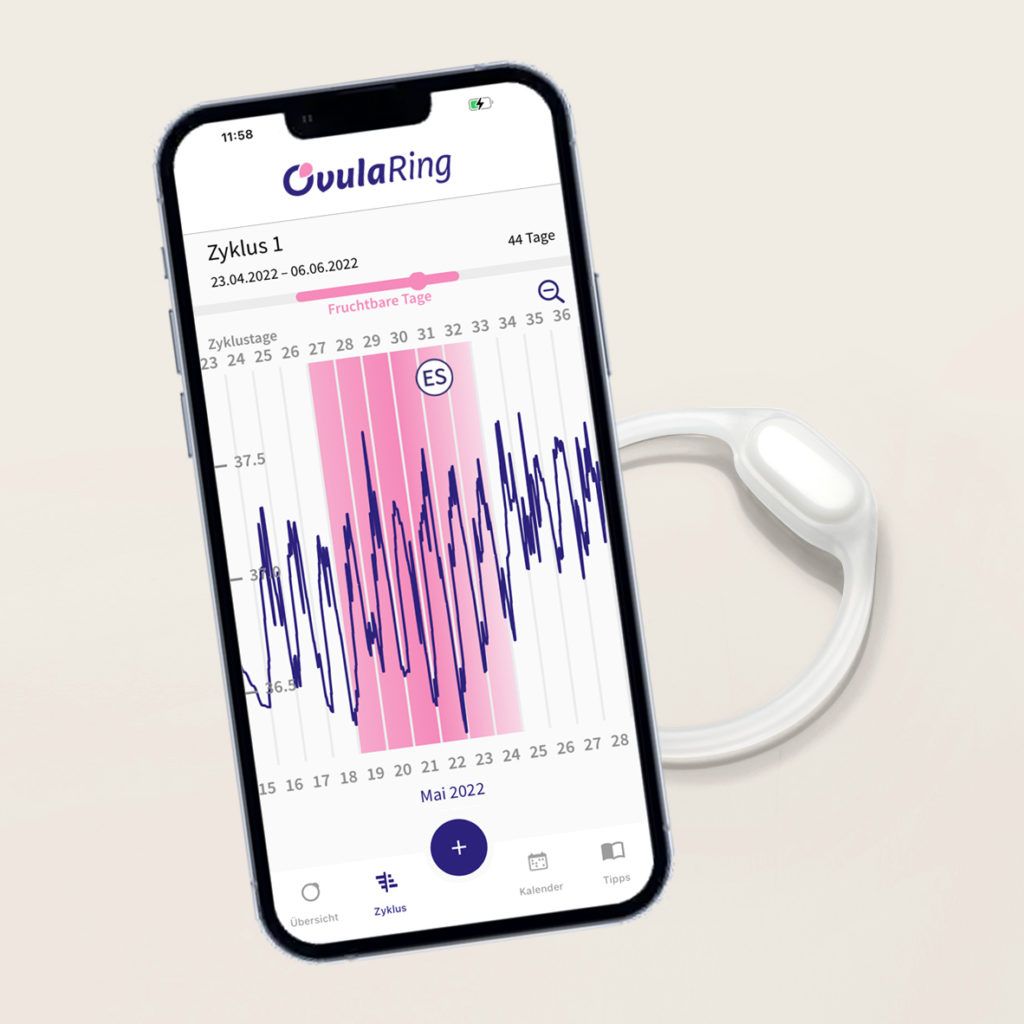
OvulaRing is inserted into the vagina immediately after your period, worn throughout your entire cycle, and removed only to transfer the data. Once inside your body, OvulaRing automatically measures and records your core body temperature every 5 minutes. You won’t even notice it’s there, so you can continue with all your usual activities and enjoy life as usual.

OvulaRing has no side effects and has been tested for good tolerability as part of its approval as a medical device.

2
Transfer data to the app

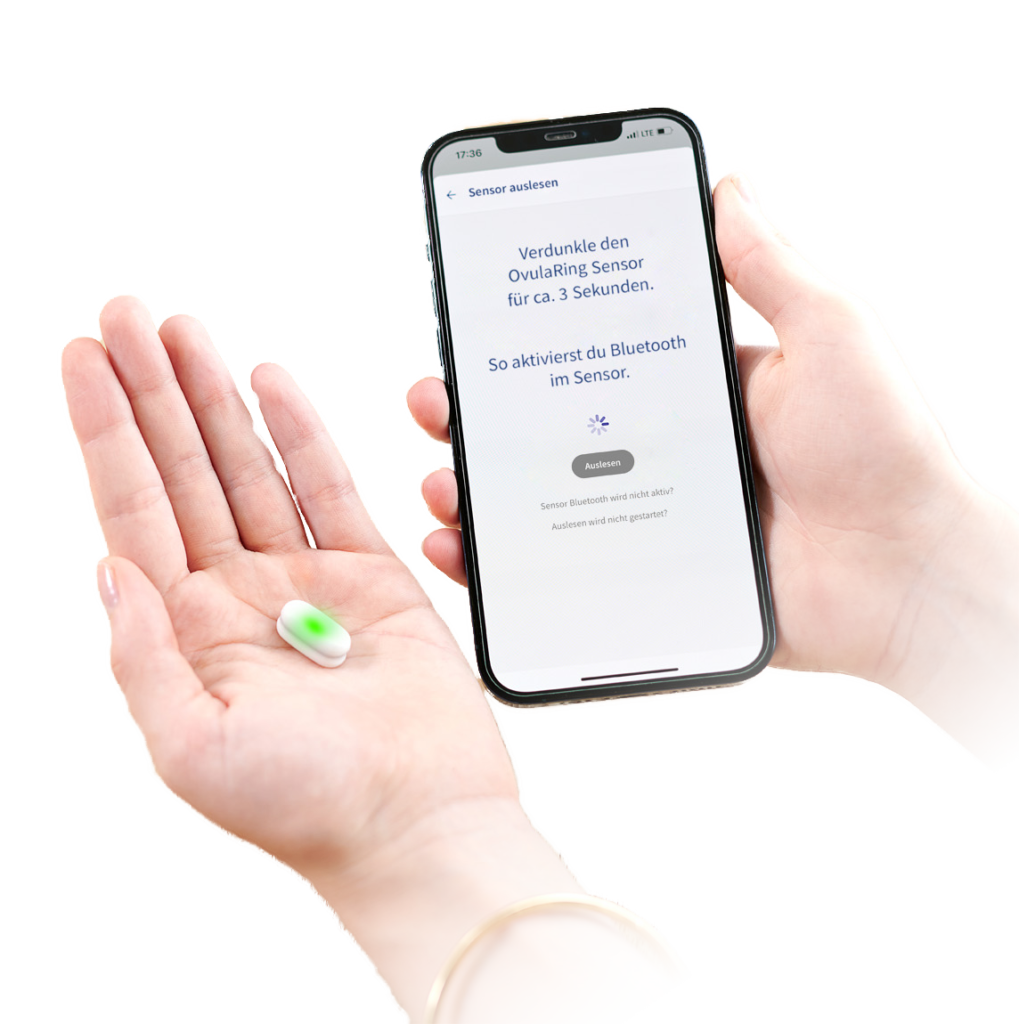
To transfer the data, remove the OvulaRing. Once outside the body, the sensor automatically switches to Bluetooth mode and sends your temperature data to the app in encrypted form. Your data is always securely protected and cannot be accessed by third parties. After the data is transferred, simply put the OvulaRing back on. You decide how often you want to transfer the data.

For natural birth control, we recommend removing the OvulaRing every day and syncing your data until the app tells you that your fertile days for this cycle are over.

OvularRing Datenübertragung
Temperaturkurve in App
3

Track your cycles in the OvulaRing app

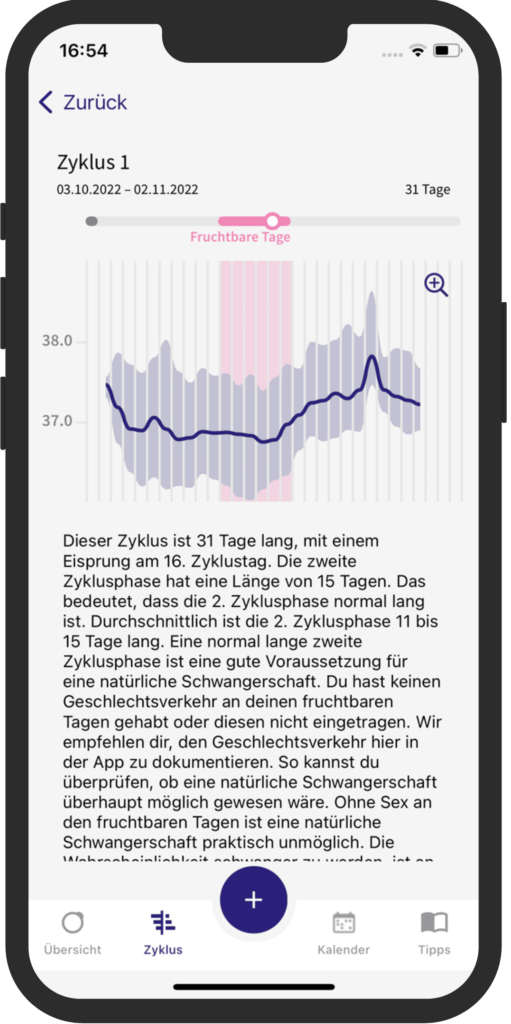
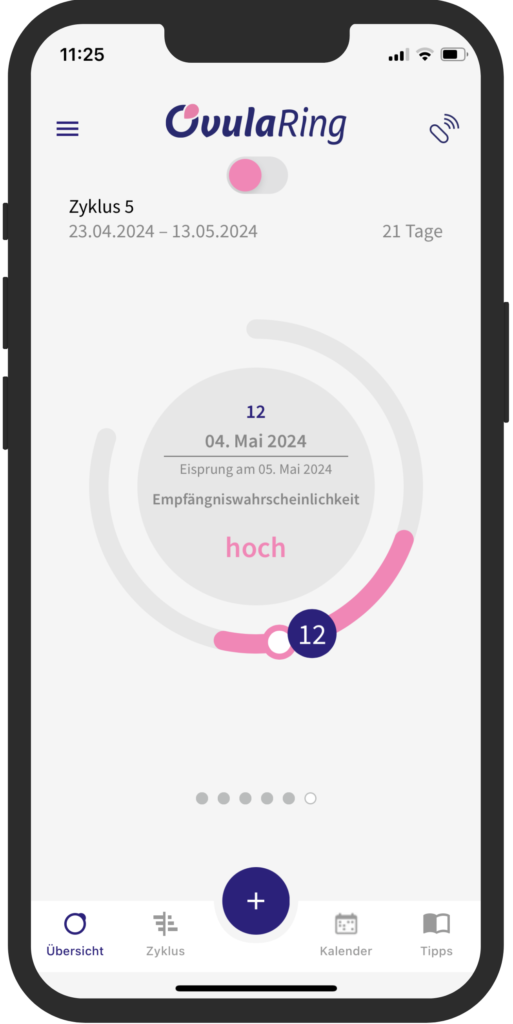
In the app or web-based software, you can view all the important information about your cycle. During your first cycle, OvulaRing gets to know you. You’ll find out exactly when you ovulated. Starting with your second cycle, every time you upload new data, you’ll see your current fertility status and know how likely it is that you could get pregnant on that particular day.

OvulaRing also lets you know when your fertile window for the current cycle has ended. After the third cycle, the software calculates a prediction for your ovulation and fertile days in the next cycle.

4

Determining your fertile days and fulfilling your dream of having a child

With OvulaRing, you can tell if your cycles are healthy and fertile, and find out when your chances of getting pregnant are highest. Each cycle has about 6 days during which you can get pregnant. This fertile window includes the 4 days before ovulation, the day of ovulation itself, and the day after.

With OvulaRing, you’ll know exactly how long your second phase of your cycle is. This means you’ll find out sooner whether you’re pregnant and can Understanding Implantation Bleeding. The OvulaRing app also performs a pregnancy test and calculates the estimated due date based on the accurately determined ovulation date.

Startscreen App

Order OvulaRing now and fulfill your dream of having a child

Take control of your fertility today and get to know your cycle better. Whether you’re trying to get pregnant, looking for natural birth control, or simply want to understand how your cycle works.

ab 65 € im Monat

OvulaRing money back quarantee

100% Money-Back Guarantee

At OvulaRing, we’re confident we can figure out how your cycle works. We’ll detect your ovulation, no matter when it happens. If OvulaRing can’t detect your ovulation, we’ll give you your money back. Guaranteed!

Do you still have questions about why you can't get pregnant?

Zyklusmythen

Further links and background information:


Find a Counseling Center – Federal Ministry for Family Affairs, Senior Citizens, Women, and Youth


Help with infertility – familienplanung.de


German Society for Fertility Counseling