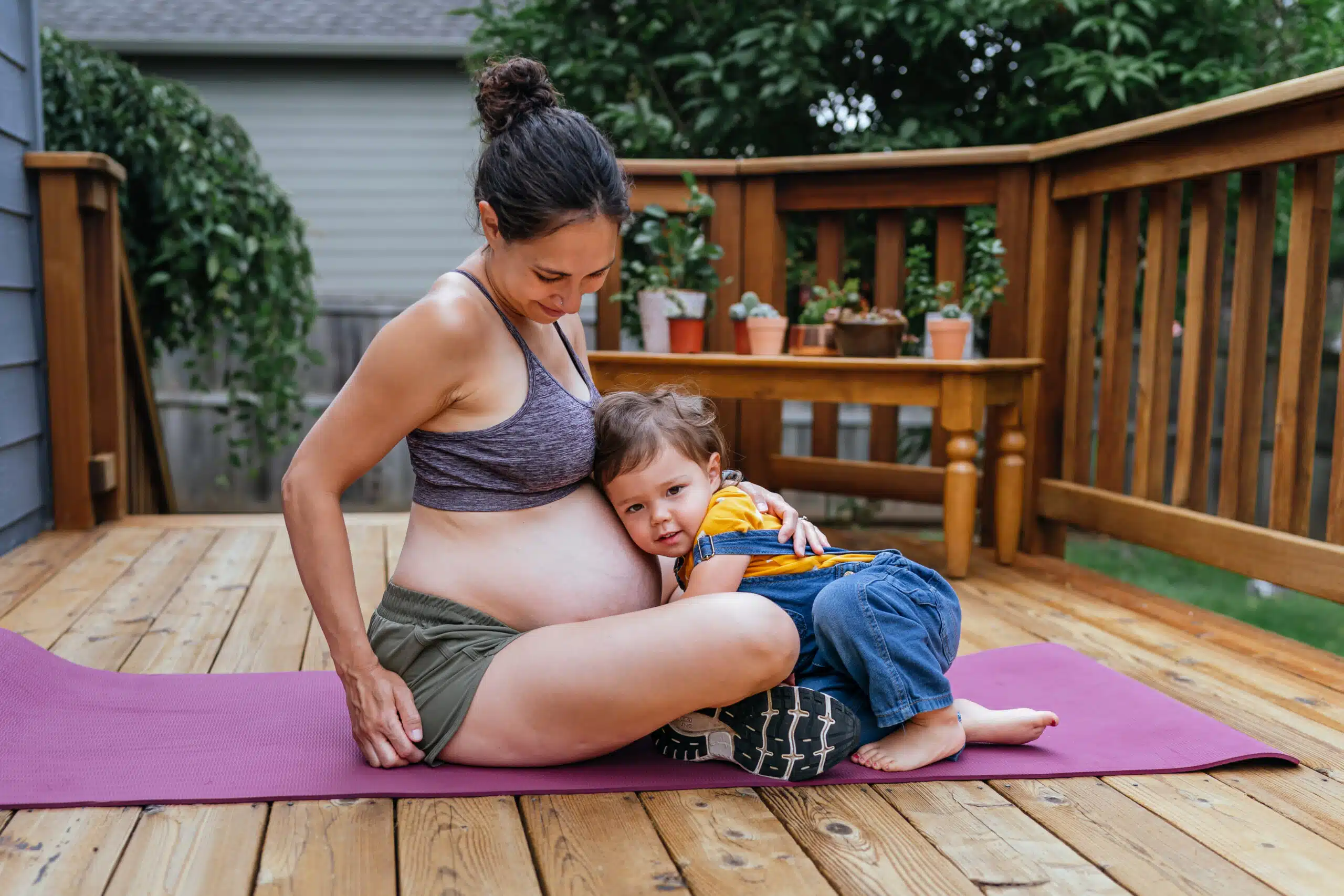


Cycle-based training: How to adapt your strength training to your cycle
Guest post by Jennifer Gutwald (B.A. Exercise and Nutrition, M.Sc. Medicine, Nutrition and hormonal health in women, in training) Not only on gym floors but...
Von:
Anne Alexander
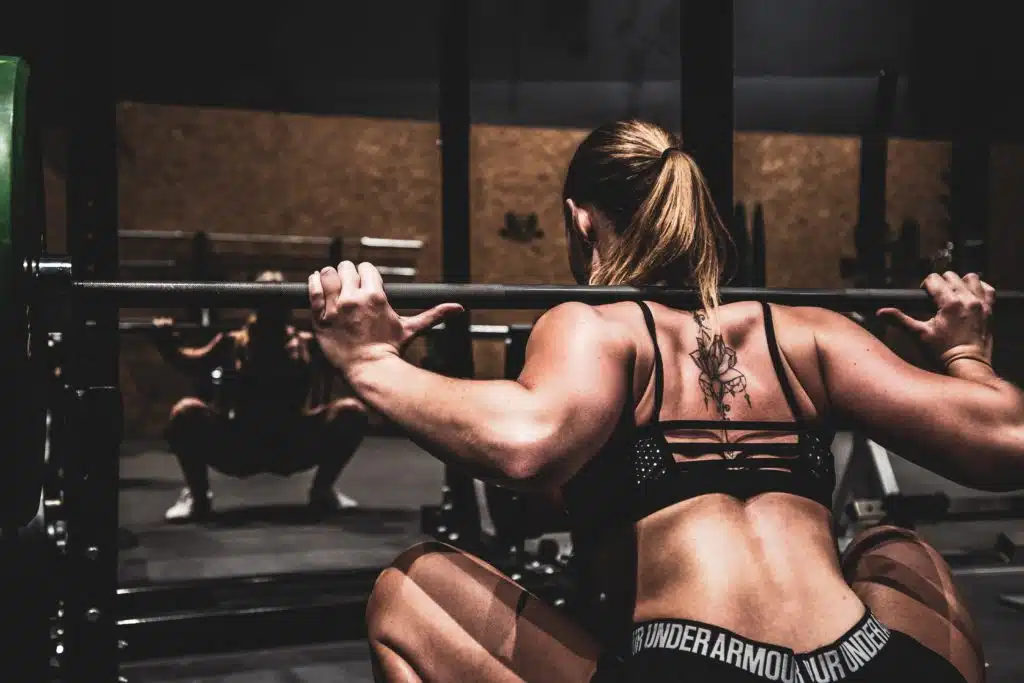
Not only on gym floors but also in research, the topic of the cycle in sport is gaining more and more attention. But why should we train in a cycle-based way? Jennifer Gutwald is a coach and expert in female physiology and says: “Strength training that takes the cycle phases into account highlights the female performance curve, reduces the risk of injury during the workout and prevents overtraining. This can help female athletes find more motivation and joy in training and achieve their goals in the weight room in the long term!” Here you’ll learn how cycle-based strength training works and how you can adapt your training to your cycle.
What are the basics of cycle-based strength training?
In strength training there are four components that determine the “design” of a workout session:
- Stimulus intensity (weight)
- Stimulus duration (number of repetitions)
- Stimulus density (rest between sets)
- Stimulus volume (number of sets)
This workload structure creates countless ways to design a workout. In strength training, there is therefore plenty of scope to incorporate the menstrual cycle into training planning.
Cycle phases at a glance
Did you know that the menstrual cycle actually consists of only two phases? The first phase is the follicular phase and starts on the day bleeding begins (cycle day 1). Follicle development already starts during menstruation and later the estrogen level continues to rise. The length of the follicular phase varies and ends with ovulation. Once ovulation has occurred, the second cycle phase begins, the luteal phase. It is characterized by an exponential rise in the hormone progesterone and usually lasts 12–16 days. However, if you look at the concentration of sex hormones over the course of the cycle, there are a few special features that are particularly relevant for training. That’s why we’ll take a closer look at the cycle below:
Menstruation
Menstruation marks the beginning of a new cycle. The duration of bleeding varies from woman to woman. However, menstruation is considered healthy when it occurs with a normal flow, is not associated with pain, and lasts about 3–5 days.
Exercise during your period – yes or no?
From a purely biological perspective, there is no reason to avoid exercise during menstruation. Quite the opposite: the first few days of the cycle already provide a good hormonal starting point for (intense) strength training. However, if pain occurs during bleeding (dysmenorrhea), those affected are often better served by a gentle movement session.
What should I pay attention to during cycle-based strength training during my period?
For some women, exercises like hip lifts (Hip Thrusts) or banded Romanian deadlifts can be uncomfortable during their period because pressure is applied to the lower abdomen. Depending on experience and how it feels subjectively, this should be taken into account in training planning for the first days of the cycle. In addition, there are many exercises that, when performed correctly, create high intra-abdominal pressure, for example squats, deadlifts or military press. Combined with a weightlifting belt1, this can also be uncomfortable for some women. In general, the female body is very robust and resilient, even during the period. So there is nothing inherently wrong with certain exercises or using a belt. But the same applies here: how it feels subjectively can absolutely be a basis for decisions when planning training during the menstruation phase.
Follicular phase
During the follicular phase, estrogen levels rise steadily and reach their highest point shortly before ovulation. Estrogen not only regulates the cycle, it also affects the psyche: it improves mood and cognitive perception and supports coping with stress. All these factors can contribute to women feeling more confident in training during the follicular phase due to the rising estrogen and having good access to their existing strength potential. To take advantage of this effect, heavy and intense strength sessions are particularly useful in the early follicular phase. A workload structure for intensive training with heavy compound lifts could look like this, for example:
- Stimulus intensity (weight): 90%–95% 1RM2
- Stimulus duration (number of repetitions): 1–3
- Stimulus density (rest between sets): 2–5 minutes
- Stimulus volume (number of sets): 3–5
Estrogen additionally supports muscle building
Because estrogen has an anabolic function in the body, it is also said to have muscle-building properties. This is largely because estrogen supports protein production, which benefits muscle hypertrophy, i.e., muscle growth. A 2014 study comparing follicular-phase-based strength training with luteal-phase-based strength training found that strength gains and muscle growth were greater when participants trained in the first phase of the cycle3. These results suggest that strength training in the follicular phase could have a greater effect than in the luteal phase. In practice, it therefore makes sense to plan many (intensive) sessions in the first cycle phase, because the body benefits from increased protein synthesis, i.e., the incorporation of proteins into muscle cells.
Ovulation phase
Although ovulation itself takes place on only one cycle day, some training adjustments should be made especially in the days before and after. The reason is that the body is most prone to injury during the fertile days. The high estrogen concentration shortly before ovulation has a negative effect on joint stability. Especially when training with free weights, a good warm-up program should therefore be planned. In addition to a general warm-up that activates the cardiovascular system (e.g., a short session on the treadmill or bike), a local warm-up should not be missing. Dynamic stretches or mobility drills are best, followed by warm-up sets with about 50% of the working weight. This prepares the target muscles as well as ligaments and tendons optimally for the upcoming load. Alternatively, the exercises can also be performed on machines—for example, instead of free squats, train on the hack squat machine, or do lat pulldowns on a machine instead of at the cable tower.
Ovulation is not always the performance peak in the cycle
As estrogen rises, the release of the hormone prolactin is also stimulated. There are indications that prolactin plays a role in inflammatory processes in the body. What does that mean for strength training? In the case of muscle soreness, micro-tears develop in muscle tissue, which also trigger an inflammatory reaction in the muscle. With insufficient recovery, there can be a higher long-term susceptibility to injuries and pain, which can also result in reduced physical performance. When planning training, it therefore makes sense to keep in mind that around ovulation women may want to place particular value on adequate recovery.
Luteal phase
The luteal phase begins directly after ovulation. It can be identified well by the post-ovulation temperature rise caused by the hormone progesterone. For many women, the luteal phase is associated with various physical symptoms such as fatigue, mood swings (due to a drop in serotonin) and reduced physical performance. The prevalence of PMS varies from study to study, but an estimated up to 85% of menstruating women occasionally experience symptoms. While the follicular phase is considered a very stress-resilient phase, the body reacts more sensitively to stress in the luteal phase. Many training recommendations derived from studies therefore suggest planning a deload here.
What does a deload look like?
Put simply, a training deload is the temporary reduction of training load. Either training volume, training intensity, or both are reduced. The goal is to give the body the opportunity to recover from an intense training load. However, a deload should not be confused with stopping training altogether! There are various ways to implement a deload.
Option 1: Focus on reducing the working weight
- Stimulus intensity (weight): 55%–60% 1RM2
- Stimulus duration (number of repetitions): 8–12
- Stimulus density (rest between sets): 60–90 seconds
- Stimulus volume (number of sets): 3–4
Option 2: Focus on reducing the training volume of a single session
- Stimulus intensity (weight): 75% 1RM2
- Stimulus duration (number of repetitions): 8–12
- Stimulus density (rest between sets): 60–90 seconds
- Stimulus volume (number of sets): 2–3
The total number of training sessions per week can also be reduced.
Does progesterone really break down muscle?
Progesterone is often said to have catabolic properties, i.e., muscle-breaking effects. This is because progesterone can reduce protein synthesis by inhibiting the mTOR signaling pathway4. But that does not mean that no muscle can be built! Strength training can also activate mTOR enzymes and stimulate protein synthesis. Combined with the right nutrition, this can counteract muscle loss.
What should I pay attention to during cycle-based strength training in the luteal phase?
Progesterone also appears to play a role in regulating movement patterns by increasing the activity of dopamine and GABA receptors in the brain and thereby improving motor control. In strength training, women benefit especially from good movement control in free-weight exercises. For example, if you train Olympic weightlifting—snatch (Clean) and clean and jerk—technical sessions can be scheduled well in the luteal phase. But other exercises that require a high degree of motor control are also a good fit now: Turkish get-ups with the kettlebell, lunges with dumbbells, single-arm military press, dips, push-ups and pull-ups, etc.
Get started now
As you can see, there are many ways to design training in a cycle-aware way. The focus is always on individualization. In her work as a coach, Jennifer Gutwald therefore takes a look at the big picture. It is particularly important to her that your needs, starting point and goals come first in training planning. She coaches athletes who want to get started ambitiously with cycle-based strength training, as well as people who suffer from cycle-related symptoms and are looking for a holistic concept for recovery.
Learn more: https://pro-strength.de/
Glossary
1 As additional support for heavy lifts, many people like to use a weightlifting belt, which is worn around the waist and supports the core musculature. The belt is worn very tightly to stabilize the spine and, with correct breathing, increases the breath-dependent pressure inside the abdominal cavity (intra-abdominal pressure).
2 1RM (one-repetition maximum) corresponds to the weight you can move exactly once with maximum effort.
3 Sung et al. Effects of folliciular versus luteal-phase based strength training in young women. Springerplus. 2014 Nov 11;3:668. doi: 10.1186/2193-1801-3-668.
4 mTOR is an enzyme that activates proteins and therefore plays an important role in muscle building.
References
Chidi-Ogbolu, N., & Baar, K. (2019). Effect of Estrogen on Musculoskeletal Performance and Injury Risk. Frontiers in Physiology, 9. https://doi.org/10.3389/fphys.2018.01834
Dam, T. V., Jensen, L., Sevdalis, V., Bibby, B. M., De Jonge, X. a. K. J., Gravholt, C. H., & Hansen, M. (2022b). Muscle Performance during the Menstrual Cycle Correlates with Psychological Well-Being, but Not Fluctuations in Sex Hormones. Medicine and Science in Sports and Exercise, 54(10), 1678–1689. https://doi.org/10.1249/mss.0000000000002961
Dehnavi, Z., Jafarnejad, F., & Kamali, Z. (2018). The Effect of aerobic exercise on primary dysmenorrhea: A clinical trial study. Journal of Education and Health Promotion, 7(1), 3. https://doi.org/10.4103/jehp.jehp_79_17
De Jonge, X. a. K. J. (2003). Effects of the Menstrual Cycle on Exercise Performance. Sports Medicine, 33(11), 833–851. https://doi.org/10.2165/00007256-200333110-00004
Martínez-Fortuny, N., Alonso-Calvete, A., Da Cuña Carrera, I., & Abalo-Núñez, R. (2023). Menstrual Cycle and Sport Injuries: A Systematic Review. International Journal of Environmental Research and Public Health, 20(4), 3264. https://doi.org/10.3390/ijerph20043264
Pereira, H., Larson, R. D., & Bemben, M. G. (2020c). Menstrual Cycle Effects on Exercise-Induced Fatigability. Frontiers in Physiology, 11. https://doi.org/10.3389/fphys.2020.00517
Tenan, M. S. (2017). Sex Hormone Effects on the Nervous System and their Impact on Muscle Strength and Motor Performance in Women. https://doi.org/10.1007/978-3-319-44558-8_4