Do I suffer from luteal insufficiency – help with self-testing
Luteal phase deficiency means that your luteal phase after ovulation is too short and your body produces too little progesterone. This can disrupt the development...
Von: Anne Alexander
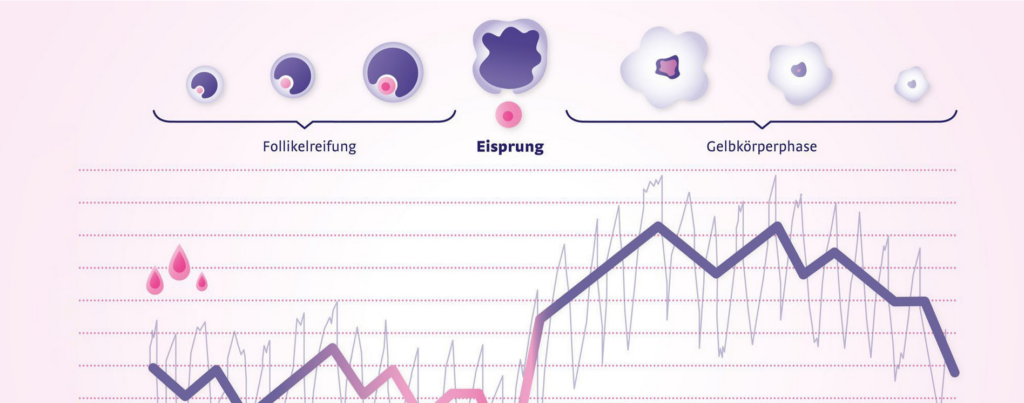
Luteal phase deficiency means that your luteal phase after ovulation is too short and your body produces too little progesterone. This can disrupt the development of the uterine lining and reduce your chances of becoming pregnant.
👉 This self-test will help you determine whether your symptoms are typical—and what steps you should take next.
Am I affected? 60-second quick check (checklist)
Check the boxes that apply to you. Multiple “yes” answers may be an indication:
- The second half of my cycle regularly lasts less than 11 days.
- I have spotting 1–3 days before my period.
- My temperature curve rises only slightly or drops too early.
- My progesterone level (blood test) was on the low side.
- I had very early miscarriages or “biochemical” pregnancies.
- I ovulate late, so there are only a few days left for the luteal phase.
- I regularly suffer from severe PMS, breast tenderness, or fatigue.
👉 Important: A “hit” does not necessarily mean a diagnosis! However, if several points apply, it is worth seeking further clarification.
Testing & Diagnostics: How to Reliably Detect Luteal Phase Insufficiency
Progesterone test: 5–7 days after ovulation
Your gynecologist will usually clarify this via a progesterone test in the second half of your cycle. Timing is crucial: about five to seven days after ovulation.
Objective cycle tracking: Measure luteal phase length (OvulaRing)
Cycle diagnostics with OvulaRing: By continuously measuring your body temperature throughout the cycle, the length of the luteal phase can be tracked objectively for the first time. The visualization in the OvulaRing app — including the cyclofertilogram — gives you and your gynecologist a clear overview of temperature rise and luteal phase length.
With OvulaRing you can, for the first time, independently check whether your second cycle phase is sufficiently long — even without visiting a gynecologist. This matters especially when you’re trying to conceive. Continuous temperature measurement makes it possible to assess the duration of the luteal phase objectively and to plan a progesterone test at the right time.
If your luteal phase is often or consistently shorter than 11 days, please contact your gynecologist.
Learn more: How OvulaRing works
When to see a doctor? Interpreting your results
A one-off short luteal phase is often unremarkable. What matters is a recurring pattern over several cycles. If abnormalities repeat or you’re trying to conceive, a gynecological evaluation is recommended.
Quick check: Clues from symptoms & curve patterns
Clues include shortened cycles, spotting before your period, or unusual temperature curves. These do not replace medical diagnostics.
How can I reliably identify the luteal phase?
- Duration: Normal is 11–15 days; luteal phase insufficiency is usually < 11 days.
- Temperature rise: Due to progesterone, core body temperature increases by approx. 0.3–0.5 °C.
- Objective measurement: With OvulaRing you can continuously record temperature trends and luteal phase length — transparent for your physician as well.
Learn more: How OvulaRing works
When should I test my progesterone?
- Right timing: 5–7 days after ovulation.
- Common pitfalls: Sampling too early or too late can lead to falsely “normal” values.
- Best combo: Cycle tracking + bloodwork provides the clearest picture.
Next steps if something looks off (Doctor & OvulaRing)
- Observe: Track several cycles to spot patterns.
- Clarify: Talk to your gynecologist if you repeatedly see a short luteal phase.
- Treat: Targeted progesterone after ovulation can improve the chance of pregnancy.
- Consider cofactors: Stress, exercise, weight, and nutrient status can play a role.
Current Medical Insights
In recent years, research into luteal phase insufficiency and its relevance for conception has expanded significantly. The focus is especially on luteal phase length and progesterone levels.
Why luteal phase length matters for implantation
Studies indicate that a shortened luteal phase (< 11 days) can reduce the likelihood of successful implantation. The uterine lining may not develop sufficiently to stably receive a fertilized egg.2
Progesterone and miscarriage risk
Inadequate progesterone during the luteal phase is associated with a higher risk of early miscarriage. A meta-analysis shows that low luteal progesterone is significantly linked to reduced pregnancy and live birth rates.1 Newer reviews also associate luteal and early-pregnancy progesterone deficiency with recurrent pregnancy loss.3
New approaches in diagnostics
Whereas older practice relied mainly on single blood tests, professional societies now recommend combining hormonal assessment with cycle-based monitoring. Tools like OvulaRing enable continuous measurement and thus more objective data. At the same time, the use of progesterone for luteal defects remains under scientific discussion.4
Relevance when trying to conceive
The evidence suggests: Timely evaluation and targeted treatment of luteal phase insufficiency can substantially improve the chance of pregnancy. At the same time, a single short luteal phase does not necessarily increase miscarriage risk — what matters is a recurring pattern over several cycles.5
References
- Low luteal serum progesterone levels are associated with lower ongoing pregnancy & live birth (meta-analysis).1
- Luteal insufficiency in the first trimester (review).2
- Exploring progesterone deficiency in first-trimester miscarriage.3
- Progesterone supplementation in human cycles (luteal phase defect).4
- Does a short luteal phase correlate with increased miscarriage risk? (cohort study).5
FAQ – Answers to Common Questions
Can I get pregnant despite luteal phase insufficiency?
Yes, it’s possible. Implantation may be more difficult, but with precise diagnostics and treatment, your chances improve significantly.
Is one cycle enough for a diagnosis?
No. A single short luteal phase is often incidental. What matters is a pattern across multiple cycles.
Does every luteal phase insufficiency need treatment?
Treatment is usually considered if it occurs repeatedly or if you’re trying to conceive.