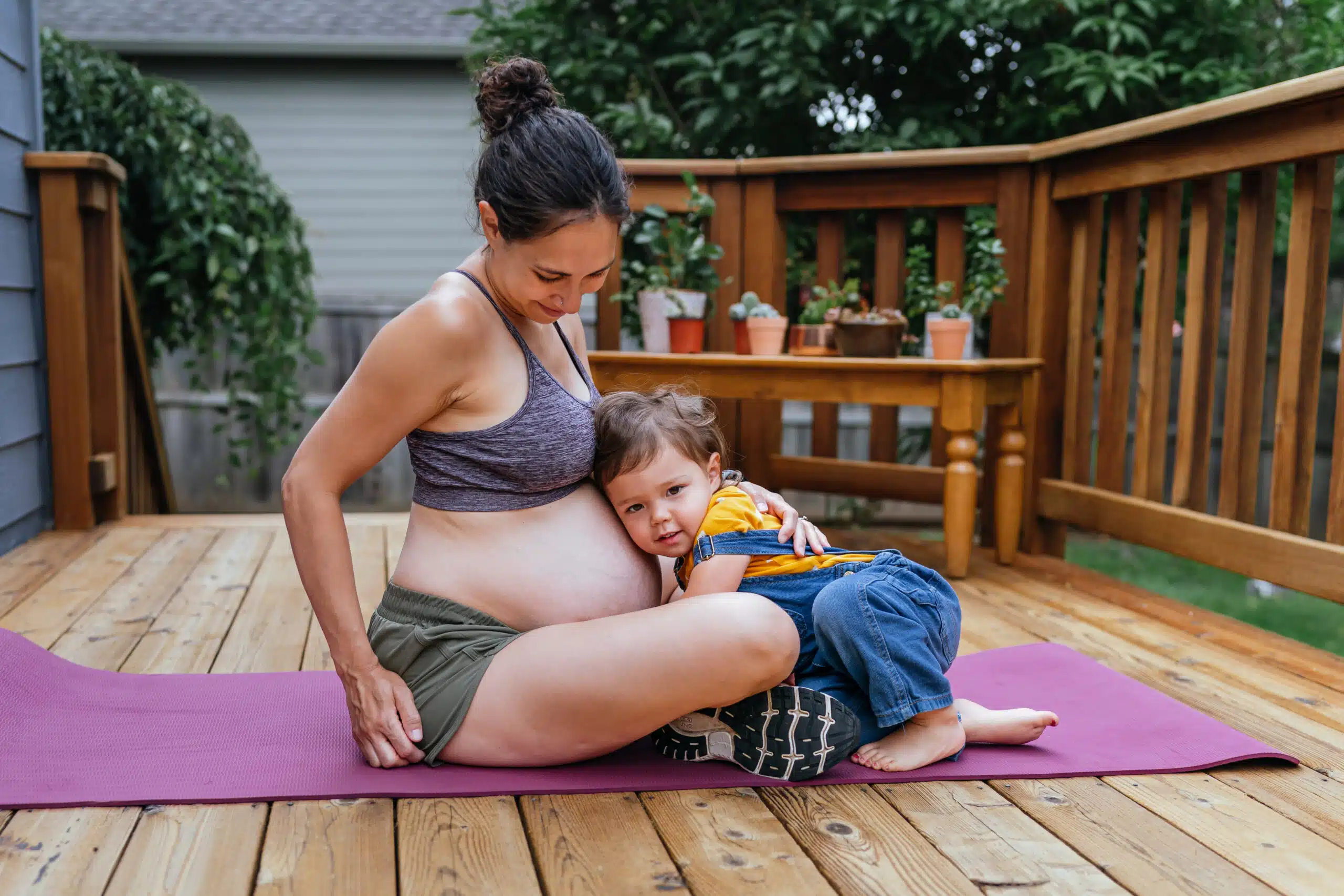


Getting Pregnant After 40: Chances, Risks, and What Really Helps You Now
Fertility naturally declines with age. Nevertheless, it’s still possible to get pregnant even after age 40. The key is to realistically assess your own situation,...
Von:
Anne Alexander

Fertility naturally declines with age. Nevertheless, it’s still possible to get pregnant even after age 40. The key is to realistically assess your own situation, make the most of your fertile window, and have any potential causes investigated early on. Because right now, every cycle counts.
In a Nutshell: Our Tips for Getting Pregnant After 40
1. Make the most of your fertile days and track your cycle as accurately as possible.
2. Don’t wait too long to seek medical attention.
3. Don’t just have your own test results checked—make sure your partner gets a semen analysis, too.
4. Pay attention to your diet, stress levels, sleep, exercise, and maintaining a healthy body weight.
5. If you’re planning to get pregnant, start taking folic acid early.
Getting Pregnant After 40: What Are the Chances?
As women get older, the likelihood of becoming pregnant decreases. While it’s 20–30 percent per cycle for young, healthy couples, it drops to an average of less than 5–10 percent by age 40. However, this does not mean that pregnancy is unlikely or impossible—but it often takes longer to conceive, and accurate diagnosis becomes all the more important.
Why Fertility Declines After Age 40
Fertility declines over the course of a woman’s life; this is a completely natural process. However, after age 40, it drops rapidly once again—and much more sharply than before. The main reason for this is that the ovarian reserve continues to decline. This refers to the remaining number of eggs in the ovaries. At the same time, the quality of the eggs also declines. Together, these factors can mean it takes longer to conceive, and at the same time, the risk of miscarriage increases statistically.
It’s important to note that statistical risks don’t provide any definitive information about your individual cycle. Many women get pregnant spontaneously even in their late 30s, early 40s, or later. That’s exactly why it’s worth getting to know your own cycle as well as possible, rather than just looking at average figures.
What Can Specifically Help You Right Now
1. Know Your Cycle and Fertile Days Exactly
If you want to get pregnant, it’s especially important to know whether you’re ovulating and when your fertile days are. That’s because there are only 6 fertile days per cycle during which you can get pregnant. However, starting at age 40, there may also be an increasing number of cycles in which
without ovulation. Tracking your cycle can help you detect irregularities early on, pinpoint your fertile days, and make the most of them. With OvulaRing, this is achieved through continuous cycle monitoring, which shows you exactly how your unique cycle actually progresses.
2. Interpreting Hormone Levels and AMH Correctly
A hormone panel can help you better assess your current situation. It often includes measurements of hormones such as FSH, LH, estradiol, prolactin, and AMH. The AMH level provides insight into your ovarian reserve—that is, the estimated number of eggs you still have. However, it is not a standalone fertility test and does not directly indicate the quality of your eggs. Therefore, the result should always be evaluated in conjunction with your age, menstrual cycle, symptoms, and other test results.
3. Considering Perimenopause
By age 40, some women are already in perimenopause, while others are not yet. While individual hormone levels can provide clues, there is no single blood test result that can reliably predict or definitively diagnose perimenopause. This is precisely why a combination of monitoring your individual menstrual cycle, tracking symptoms, and consulting a doctor is recommended.
With continuous cycle tracking, you can closely monitor whether your ovulation might be shifting or even skipping, and whether the second half of your cycle is long enough. This way, you can keep track of your cycle at all times and better determine whether you might be going through perimenopause.
4. Check Male Fertility
Male fertility also declines with age. Among other things, changes in sperm motility, morphology, and DNA integrity have been described. All of this can make it significantly more difficult to conceive or even lead to recurrent miscarriages. To gain clarity regarding male fertility, a semen analysis is recommended; in some cases, further diagnostic testing—such as for DNA fragmentation—can also be very helpful.
Avoiding alcohol, nicotine (!), and other drugs, along with a healthy lifestyle that includes a balanced diet and sufficient exercise, has been shown to have a positive effect on sperm quality in men.
Natural Ways to Support Conception: Diet, Lifestyle, and Exercise
A balanced diet, adequate sleep, a healthy body weight, moderate exercise, and stress reduction can support overall health and, consequently, the conditions necessary for pregnancy. It is also important to start taking folic acid even before planning a pregnancy: The recommended dose is 400 µg daily in addition to your regular diet, ideally starting when you begin trying to conceive or at least 4 weeks before pregnancy.
When it comes to exercise, the rule is: Regular physical activity is beneficial, but extreme exertion often isn’t. An (excessively) high training load causes the body to release the stress hormone cortisol, which in turn suppresses sex hormones and can make it harder to get pregnant. If you exercise a lot, you should also make sure you’re getting enough calories. The key is a healthy, well-balanced daily routine without excessive physical or mental stress.
Extra tip for couples trying to conceive: Choosing the right lubricant can make a difference. If you use lubricant, it should always be sperm-friendly.
When You Should Seek Support
If you’re over 35 and haven’t become pregnant after about 6 months of regular unprotected sex during your fertile window, it’s a good idea to get checked out. If you’re over 40, it’s best to have this conversation sooner rather than later, because every cycle counts now. This way, you can save valuable months and have potential causes investigated in a targeted manner.
Conclusion: It is possible to get pregnant after age 40—having a clear plan is especially important now
It is still possible to get pregnant after age 40. At the same time, it becomes even more important to understand your cycle very well, to make the most of your fertile days, and not to delay seeking medical advice unnecessarily.
Continuous cycle tracking, a clear understanding of your hormonal status, a realistic assessment of your AMH level, consideration of male fertility, and a daily routine that supports your health and fertility are particularly helpful.
References
American College of Obstetricians and Gynecologists (ACOG). 2019. The Use of Antimüllerian Hormone in Women Not Seeking Fertility Care. ACOG Committee Opinion No. 773.
American Urological Association / American Society for Reproductive Medicine (AUA/ASRM) (2020, überarbeitet 2024): Diagnosis and Treatment of Infertility in Men: AUA/ASRM Guideline.
German Nutrition Society (DGE) / “Healthy Start to Life” Network. 2018. Nutrition and Lifestyle Before and During Pregnancy – Recommendations for Action.
American College of Obstetricians and Gynecologists (ACOG). 2023. Having a Baby After Age 35: How Aging Affects Fertility and Pregnancy.
American College of Obstetricians and Gynecologists (ACOG). 2020. Evaluating Infertility.
American Society for Reproductive Medicine (ASRM). 2022. Optimizing natural fertility: a committee opinion. Vol. 117, pp. 53–63.
American Society for Reproductive Medicine (ASRM). 2025. Assisted reproduction with advancing paternal and maternal age: an Ethics Committee opinion.
European Society of Human Reproduction and Embryology (ESHRE). Female fertility and age.
National Institute for Health and Care Excellence (NICE). 2015, aktualisiert 2026. https://www.nice.org.uk/guidance/ng23.