Cycle with luteal phase deficiency

Updated on: Author: Medically reviewed by: Prof. Dr. med. Alexander

What are the characteristics of cycles with luteal phase deficiency?

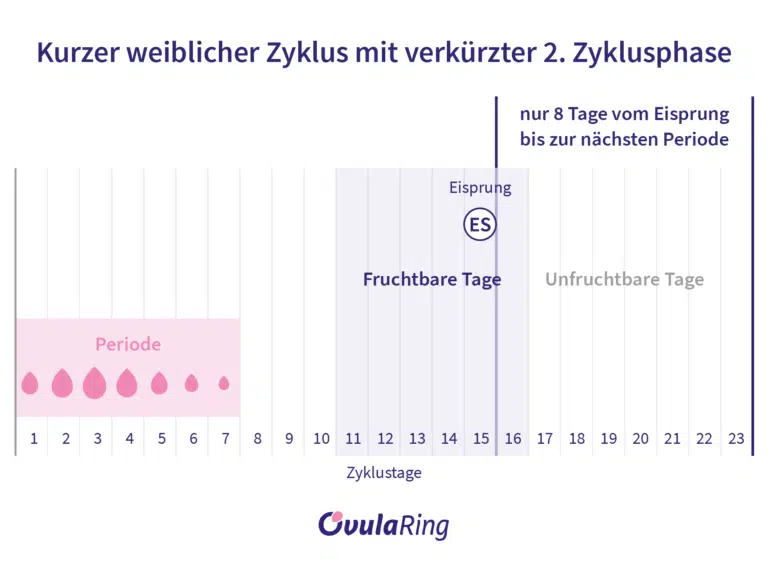
Luteal phase deficiency occurs when the second phase of the menstrual cycle (luteal phase) is shortened and lasts less than 10 days. Particularly short cycles can therefore be a sign of luteal phase deficiency. According to studies, about 9% of all cycles are affected*.

Are you wondering if your cycle shows signs of luteal phase deficiency? With the clinically tested OvulaRing**, you can better understand your cycle and detect early signs of luteal phase deficiency. On this page, we’ll show you how OvulaRing works and how it actively supports you during treatment.

Reliably detecting luteal insufficiency

How does luteal phase deficiency affect my fertility?

In cases of luteal insufficiency—also known as progesterone or luteal insufficiency—ovulation occurs, but the resulting corpus luteum does not produce enough progesterone. This progesterone deficiency prevents the uterine lining from building up sufficiently.

This can make it difficult or impossible for a fertilized egg to implant, meaning you won’t get pregnant even though you’re ovulating. Or implantation may occur under unfavorable hormonal conditions, leading to an early miscarriage. Once diagnosed, luteal phase deficiency can be effectively treated.

With OvulaRing, you can determine whether the second half of your cycle is consistently shorter. If this is the case, you should see your gynecologist.

How does a progesterone deficiency affect my cycle and fertility?

If there is a lack of progesterone, the uterine lining does not build up sufficiently. However, a fertilized egg can only implant if the lining is stable. This makes implantation difficult or even prevents it.

In other words: You won’t get pregnant even if you ovulate. Alternatively, implantation may occur under unfavorable hormonal conditions, leading to an early miscarriage. However, once diagnosed, luteal phase deficiency can be effectively treated.

How can OvulaRing help me detect luteal phase deficiency?

With OvulaRing, you can determine whether the second half of your cycle is consistently shorter. This is the clearest sign of luteal phase deficiency. If this is the case, you should see your gynecologist.

Treating luteal insufficiency

How is luteal insufficiency treated?

If the second half of your cycle has been shorter than 10 days for several months, your doctor should perform a hormone test. If luteal phase deficiency is confirmed, it should be treated. Luteal phase deficiency is often the result of a disrupted ovulation phase and can be treated with medication, such as clomiphene, administered during the first half of the cycle.

In addition, progesterone is usually prescribed to support the growth of the uterine lining in the second half of the cycle after ovulation. It is important to note that progesterone should only be taken after ovulation, as it otherwise acts as a contraceptive.

With OvulaRing, you can pinpoint exactly when you ovulate, allowing you to better determine the right time to take progesterone.

For more information: Getting Pregnant with Luteal Phase Defect

Drug treatment for luteal insufficiency

Luteal phase deficiency is often the result of a disrupted ovulation phase and can be caused by a medication, e.g., by administering clomiphene during the first half of the cycle.

In addition, progesterone is usually prescribed to support the growth of the uterine lining in the second half of the cycle after ovulation. It is important, however, that the progesterone is taken only after ovulation, as it otherwise acts as a contraceptive.

How OvulaRing can also support you during treatment

OvulaRing helps you pinpoint the exact time of ovulation and time your progesterone intake accordingly. This helps you avoid taking progesterone too early—that is, before ovulation—since this can have a contraceptive effect.

Any other questions about luteal insufficiency?

Do I have luteal insufficiency?
Getting Pregnant with Luteal Phase Defect

Identifying Fertile Days Despite Luteal Phase Defect: OvulaRing Enables Accurate Cycle Tracking

OvulaRing helps you accurately identify your fertile days

OvulaRing detects ovulation with over 99% accuracy and can help you determine whether you ovulate regularly and, if so, when. Your cycle is tracked automatically and completely unnoticed. This makes it possible to detect even minor fluctuations.

OvulaRing has been tested in independent clinical studies for all cycle types and is therefore able to provide accurate insights into your cycle health, even with extremely short cycles.

* Raith-Paula et al., Natural Family Planning Today, 5th edition, 2013, p. 134

OvulaRing is more than just a period tracker

OvulaRing is suitable for all types of menstrual cycles

Is your cycle very short, very long, or irregular? Thanks to its continuous monitoring, OvulaRing can be used for all cycle types and has been validated in three medical studies for a wide variety of cycle types.

OvulaRing is not a basal body temperature thermometer

The patented OvulaRing method does not determine fertile days based on basal body temperature. OvulaRing measures and analyzes core body temperature 288 times a day, thereby identifying individual fertility patterns that allow for precise insights into the menstrual cycle.

OvulaRing is convenient and you can't feel it

OvulaRing is easy to use and you won’t even notice it’s there. While wearing OvulaRing, you can continue to exercise, go to the sauna, have sex, and enjoy life. The automatic internal monitoring provides accurate results, no matter what your daily routine looks like.

OvulaRing tracks your cycle and provides real-time results

OvulaRing can tell you exactly whether you’re ovulating and whether your cycles are healthy. Once OvulaRing has learned your individual cycle patterns, the analysis software also calculates your daily likelihood of conception.

OvulaRing was developed by gynecologists and clinically tested

OvulaRing is based on 40 years of scientific research by renowned gynecologists and reproductive medicine specialists. The accuracy of OvulaRing has been proven in independent medical studies.

OvulaRing is free of hormones and side effects

OvulaRing works entirely without hormones and is free of plasticizers and side effects. Its high level of comfort and the material’s good tolerability have been confirmed in several medical studies.

How OvulaRing Works

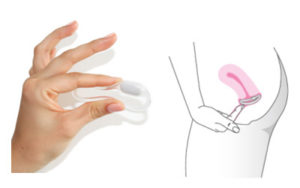
1. Wear the OvulaRing

OvulaRing - flexibler Kunststoffring und Biosensor - so einfach anzuwenden wie ein Tampon

Once your period has ended, OvulaRing is inserted into the vagina just like a tampon. Regardless of external factors, it automatically records your temperature every 5 minutes inside your body, tracking your individual fertility patterns.

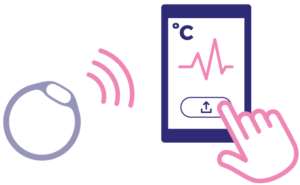
2. Transfer data

OvulaRing Datenübertragung - Bluetooth Sensor einfach über smartphone auslesen

The data is transferred to the web-based analysis software using a USB reader. You can access it anytime, anywhere through your personal account. The security of your data is our top priority.

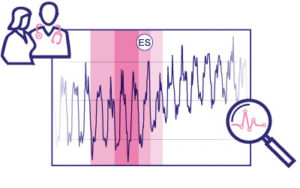
2. Evaluate the cycle

Temperaturkurve des weiblichen Zyklus - Ovularing Auswertung

The software uses medical algorithms to analyze your cycle. In addition to cycle length, ovulation day, and the length of the cycle phases, it shows you your daily probability of conception*** and an ovulation forecast**** for the following month.

Order OvulaRing now

Take control of your fertility now and get to know your cycle better. Whether you’re trying to get pregnant, looking for natural birth control, or simply want to understand how your cycle works.

Start using your OvulaRing now
from €44 per month

Do you have any questions?

Zyklusmythen